Your Boss Is a Token Vote: The Legal Gray Zone of DAO- Governed Employment
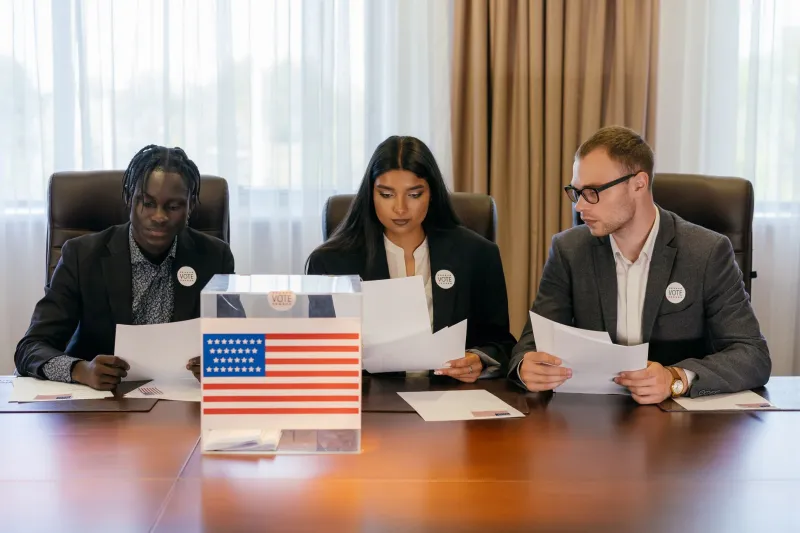
Somewhere in America right now, a contributor to a decentralized autonomous organization is reading a forum post announcing that the community has voted to terminate their role. No meeting with HR. No performance improvement plan. No severance letter. Just a snapshot vote, a quorum threshold met, and a multisig that will remove their wallet's permissions by the end of the epoch.
Welcome to community-governed employment — an arrangement the traditional org chart has no vocabulary for, and one that US employment law has barely begun to notice.
When the Org Chart Is a Forum
The pitch is seductive, and to be fair, often sincere. DAOs promise meritocratic contribution: work is rewarded based on output, governance is transparent, and anyone can rise by earning the community's trust. For talented people burned by corporate bureaucracy, that vision lands.
The reality, however, is that many DAOs have imported the least pleasant features of at-will employment while discarding its few protections. A contributor can be voted out by token holders who have never interacted with their work. Governance whales — some holding tokens acquired purely for speculation — can swing votes affecting people's livelihoods. And because the 'employer' is often a legal fiction or nothing at all, the accountability structures American workers take for granted simply don't attach.
What the Law Actually Says (and Doesn't)
Here is the uncomfortable truth: for most DAO contributors classified as independent contractors — which is most of them — there is no wrongful termination claim to bring. At-will employment in the US already permits dismissal for nearly any reason, but contractors have even less: no minimum wage protections, no overtime, no unemployment insurance, no anti-discrimination recourse in many scenarios, and no severance unless one was negotiated.
Courts have started, haltingly, to engage with the question. The basis on which a contributor is paid, the degree of control the organization exerts, and the permanence of the relationship all matter for classification — and misclassification carries real consequences for the organizations involved. But enforcement remains rare, and the case law involving DAOs specifically is thin. A worker removed by token vote today has, in practical terms, almost no remedy unless the engagement contract explicitly provides one.
That is the opinion at the heart of this piece: the industry has built governance systems of remarkable sophistication for managing treasury funds, and almost none for managing the humans who build the treasury's value. That imbalance is a design failure, and it will eventually cost the sector talent it can't afford to lose.
Protecting Yourself Before You Join
Until DAOs self-correct or regulators step in, contributors need to treat engagement terms as their primary protection. Before committing to a decentralized team, insist on the following:
- A written engagement agreement — on-chain or off — that specifies termination conditions, notice periods, and dispute resolution. If a DAO can't produce one, that tells you something.
- Defined severance or vesting treatment. What happens to your unvested tokens if the community votes you out? If the answer is 'they're gone,' negotiate acceleration clauses before you sign.
- Clarity on classification. Understand whether you're being engaged as a contractor or treated de facto as an employee, and what each means for your taxes and protections.
- Governance process documentation. How are contributor removals actually handled — by core team decision, elected council, or open token vote? A process that exists only in Discord culture is not a process.
- Your own legal review. For meaningful engagements, an hour with an employment attorney familiar with crypto is cheap insurance.
A Structural Problem, Not a Personal One
None of this means DAOs are doomed or that their contributors are naive. It means that employment — with all its messiness, its protections, its obligations — is being reinvented by people who mostly aren't thinking about employment law, and the people bearing the risk are the workers. Until governance matures to include contributor rights alongside treasury rights, the burden of self-protection falls entirely on the individual. Know that going in. Negotiate accordingly. And read the forum before you commit your career to it.